Sole trader or limited company? My take for 2026
Sole trader or limited company in the UK? My honest take on when to stay a sole trader, when a company makes sense, and what GOV.UK says about tax and risk.
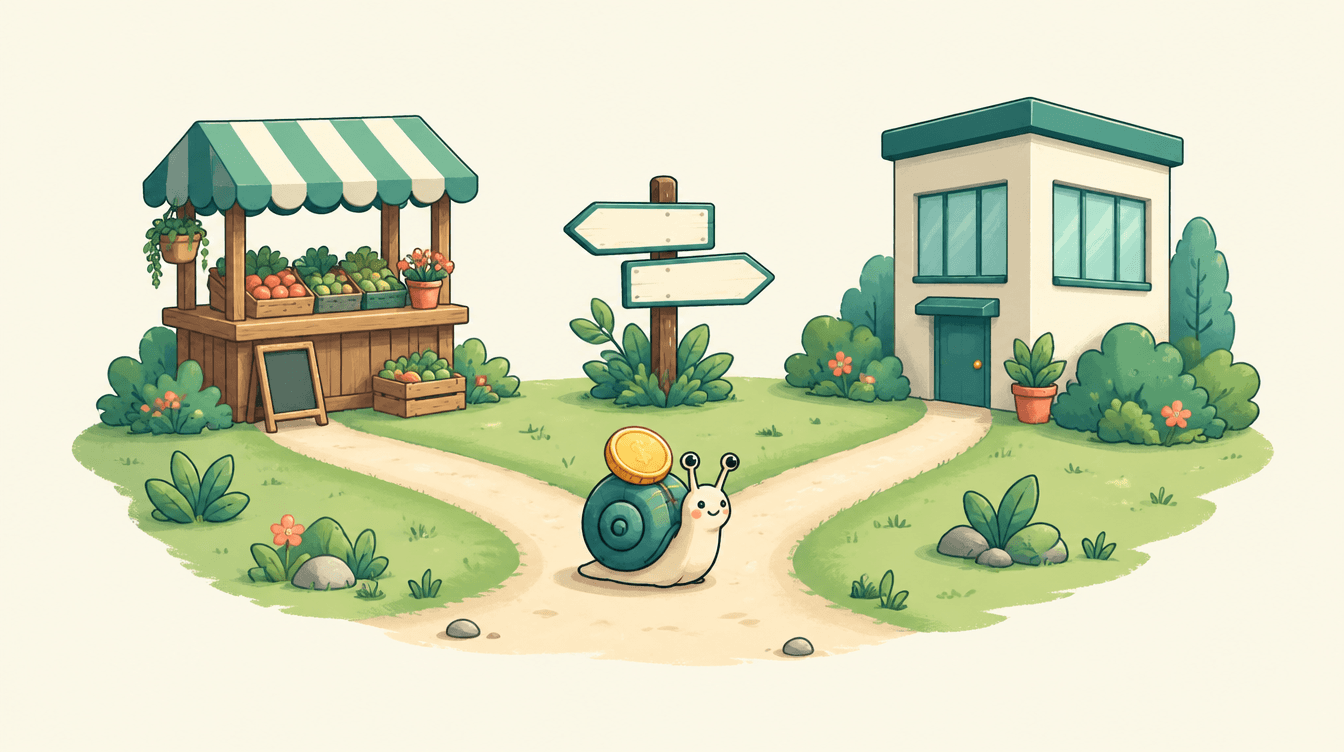
Sooner or later someone tells you to set up a limited company. Usually it's a friend who "saves a fortune on tax". So, sole trader or limited company? My view: most people starting out should stay a sole trader. Switch when you have a clear reason, not because it sounds more serious.
Here's how I'd think about it, using the 2026 to 2027 figures on GOV.UK, checked on 6 November 2026.
Sole trader or limited company: what's the real difference?
It comes down to two things: who owns the debts, and who pays the tax.
GOV.UK says that as a sole trader you are "personally responsible for all of the debts of the business". In a limited company, owners are responsible for business debts only up to the value of their financial investment.
On tax, sole traders pay Income Tax on their profits and don't pay Corporation Tax. A limited company pays Corporation Tax on its profits. You then pay tax again on whatever you take out as salary or dividends.
That second layer is where the savings, and the extra work, come from.
What does a sole trader pay?
For 2026 to 2027, GOV.UK lists a Personal Allowance of £12,570. Then 20% on income from £12,571 to £50,270, and 40% from £50,271 to £125,140.
On top of that you pay Class 4 national insurance. GOV.UK says that's 6% on profits between £12,570 and £50,270, and 2% above that. I explain the classes in my post on national insurance for the self-employed.
It's simple. You keep records, file one Self Assessment return, and the profit is yours.
What does a limited company pay?
GOV.UK shows Corporation Tax at 19% for profits of £50,000 or less and 25% for profits over £250,000. Profits in between can get Marginal Relief.
Say you're a freelance designer and your company makes £40,000 profit. At 19%, that's £7,600 in Corporation Tax. That's an example, not advice. It ignores your salary, costs and anything else you do.
Then there's the money you pay yourself. GOV.UK lists a dividend allowance of £500 for 2026 to 2027. After that, dividends are taxed at 10.75% for basic rate taxpayers and 35.75% for higher rate taxpayers.
So the saving isn't automatic. It depends on how much profit you leave in the company and how much you take out. If you need all the money to live on, the gap between the two routes is usually smaller than people expect.
What does a limited company cost you in effort?
This is the part people skip.
Registering online costs £100. That's the easy bit. After that, the company has to prepare annual accounts, complete a Company Tax Return and pay Corporation Tax. GOV.UK also warns that you remain "still legally responsible for your company's records, accounts and performance" even if you hire an accountant. Failing your duties can lead to fines, prosecution or disqualification as a director.
You'll almost certainly want an accountant. That's a monthly cost a sole trader often avoids.
The company's money is also not your money. You can't just dip into it for the weekly shop. That means you need to think about how you pay yourself, and keep personal and company spending apart with a separate account.
When does staying a sole trader make sense?
In my view, in these cases:
- You're just starting and don't know yet what you'll earn.
- Your profit is modest and you need most of it to live on.
- Your work carries little risk of big debts or claims.
- You want the least admin possible.
A dog walker, a tutor or a cleaner with a steady list of customers can run happily as a sole trader for years. I'd rather you spend your Sundays with your family than on company paperwork.
When does a limited company make sense?
I'd think about it when:
- Your profit is comfortably above what you need to spend, so you can leave money in the company.
- You take on real risk. For example, you sign contracts that could leave you owing a lot if something goes wrong.
- A client or a contract insists on working with a company.
- You plan to hire people or bring in a partner.
Note the first one. If you're pulling out every pound, a company mostly gives you more forms. If you can leave a good slice behind, the lower Corporation Tax rate starts to help.
One more thing. Limited liability isn't a magic shield. Banks and landlords often ask directors for personal guarantees, which puts you back on the hook.
Can I switch later?
Yes. Many people start as a sole trader and move to a company once the income is steady and the risk is real. You don't have to get this right on day one. Talk to an accountant before you switch, because the details of closing one business and opening another matter.
My take
Don't pick a structure to look professional. Customers care that you turn up, do good work and send a clear invoice. Pick the structure that fits your profit, your risk and the amount of admin you can stand.
Whichever you choose, you still need to get paid on time. That's what we build Vcents for. You send a payment request in WhatsApp, your customer pays from their bank app, and you can see straight away who's paid. It works the same for a sole trader or a company.
Sources
About the author · Drafted with AI help, then published by Vince, who answers for every piece. Figures come from the primary sources linked in each article. Spot a mistake? Tell us on WhatsApp and we fix it.
Read next
- Late payment statistics for UK sole traders · Late payment
- How to pay yourself as a sole trader in the UK · Sole traders
- How many self-employed women are there in the UK? · Sole traders
- Self-employed pension UK: how many actually save? · Sole traders
Know who’s paid without opening a spreadsheet.
Ask Vcents “who still owes me?” on WhatsApp and get the list back in a second.
How receiving payments works