Should I raise my prices? A self-employed view
Should I raise my prices as a self-employed person? Inflation and wages both rose this year, so waiting costs you money. Here's how to do it.
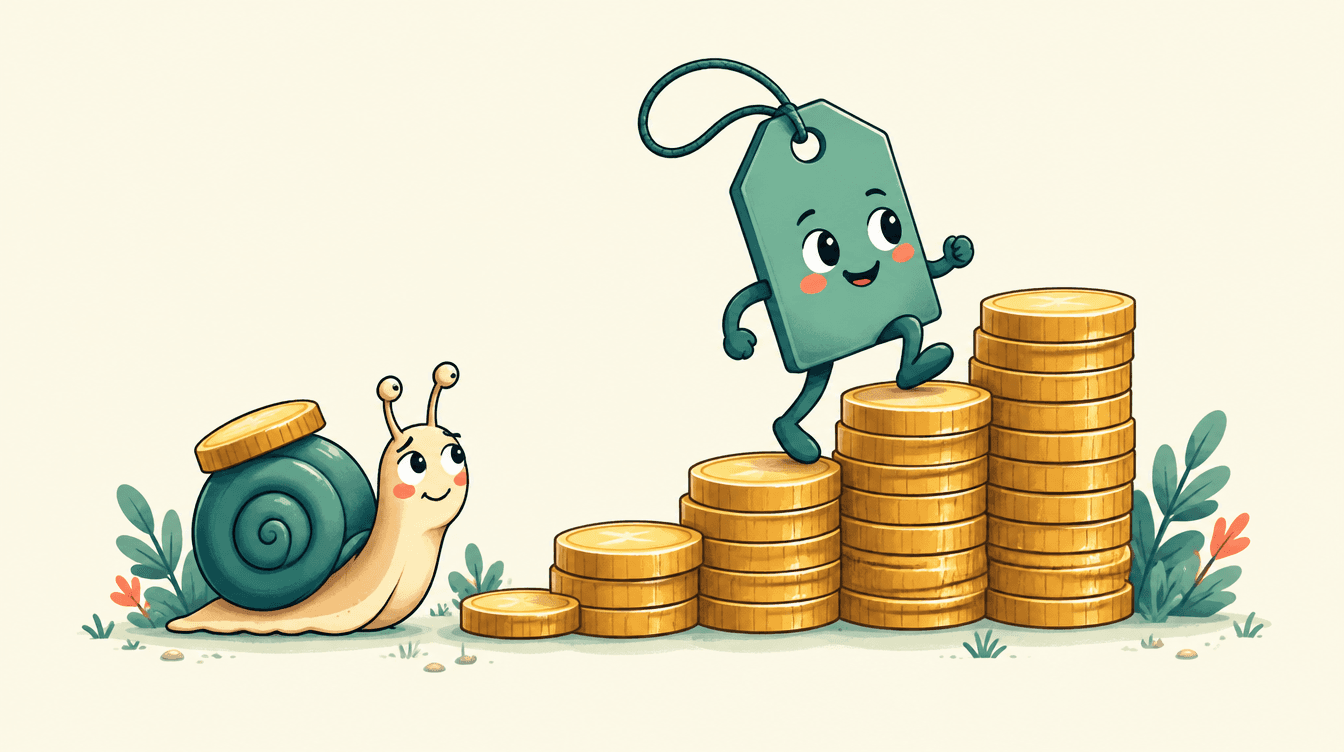
If you're asking "should I raise my prices", you probably already know the answer. Nobody asks that question when things feel fine. You ask it when you've done the sums and the number at the bottom looks smaller than it did last year.
Here's my view. Most self-employed people raise prices too late and by too little. And the reason is rarely money. It's the fear of one awkward message.
What actually happened to prices this year
The Office for National Statistics (ONS) said in its release of 16 September 2026 that consumer prices rose 3.1% in the 12 months to August 2026. The July figure was 2.9%. For services, which is what most self-employed people sell, the rate was 3.4%.
That's the cost of living going up. Now look at what your customers' side of the world did. GOV.UK says the National Living Wage for workers aged 21 and over is £12.71 an hour from 1 April 2026. It was £12.21 before. That's 50p more an hour, or about 4.1% (my sum, not GOV.UK's).
So if you charged the same in October 2026 as you did a year ago, you took a pay cut. Nobody announced it. Nobody asked you. It just happened, quietly, one grocery shop at a time.
The maths of waiting
Say you're a tutor charging £30 an hour. Services inflation of 3.4% means the same hour needs to cost about £31 just to stand still. That's an example, but the arithmetic holds for any price.
Now say you teach 20 hours a week for 48 weeks. That's 960 hours. A £1 rise is £960 a year. A £2 rise is £1,920. Those aren't small sums for one person with no employer paying into anything.
And you don't lose that money once. You lose it every year you wait, because next year's rise starts from the wrong place. A price that's two years stale is two years of lost raises stacked on each other.
Why we don't do it
I've heard the same reasons from self-employed people again and again.
- "My customers will leave."
- "They've been with me for years. It feels rude."
- "I'll do it after the busy period."
- "I don't know what to say."
The first one is the real fear, so let's be honest about it. Some customers might leave. A few will. But look at your own list. Think about who pays on time, who rearranges at the last minute, who asks for a discount. The customers most likely to leave over £2 are often the ones who cost you the most effort.
I'm not saying that's true for everyone. I'm saying look before you decide.
The second one confuses loyalty with a fixed price. A long-term customer who likes you will understand a rise. They have a boss, a landlord and a shopping bill too.
The third one never ends. There's always another busy period.
How I'd do it
You don't need a speech. You need a date and a short message.
- Pick a start date at least four weeks away. The first of next month works. It gives people time and makes it feel like a normal change, not a sudden one.
- Decide the new price first. Don't write "I'm thinking of maybe going up a bit". Write the actual number.
- Say it once, plainly. For example: "Hi Sam, from 1 November my rate goes from £30 to £33 an hour. Happy to keep your usual slot. Let me know if you've any questions."
- Don't apologise and don't justify. Costs went up. You can say that in one sentence if you want. You don't owe a long explanation.
- Make exceptions on purpose. If you keep someone on the old rate, tell them it's a favour and say when it ends.
New customers get the new price from today. That part is free. It needs no awkward message at all.
If you want a rough guide for how big the rise should be, start with services inflation of 3.4% and add what your costs have done. If your fuel, software or insurance went up more than that, your rise should too. If you haven't raised your price in two or three years, a bigger step is fair. You can also look at what the average self-employed person earns to see where you sit, though your trade and area matter more than any average.
A word on getting paid at the new price
A higher price only helps if it actually lands in your account. Raising your rate by 10% and then waiting 45 days for the money doesn't fix much. If you want a simple way to protect the new price, ask for a deposit on bigger jobs and send payment requests the moment the work is done.
My take
Raise your prices once a year, on a date you pick, with a short message. Treat it like any other admin task, the same as filing your tax return. It stops being scary when it stops being a big decision.
At Vcents we're building a way to ask for money from inside WhatsApp, which is where most of these price messages end up anyway. A payment link sent in the same chat as "from 1 November it's £33" is one less step for your customer. But the rise itself doesn't need any tool. It needs you to send the message.
Sources
- ONS: Consumer price inflation, UK: August 2026, released 16 September 2026
- GOV.UK: National Minimum Wage and National Living Wage rates, checked 13 October 2026
Vcents turns the thread into a payment.
Ask for money in plain English. Your customer taps once, authorises in their own bank, and the receipt lands back in the chat.
How receiving payments works