Should I offer a discount for early payment?
Should I offer a discount for early payment as a self-employed person? My take: rarely. Here's the maths, and what the law already gives you.
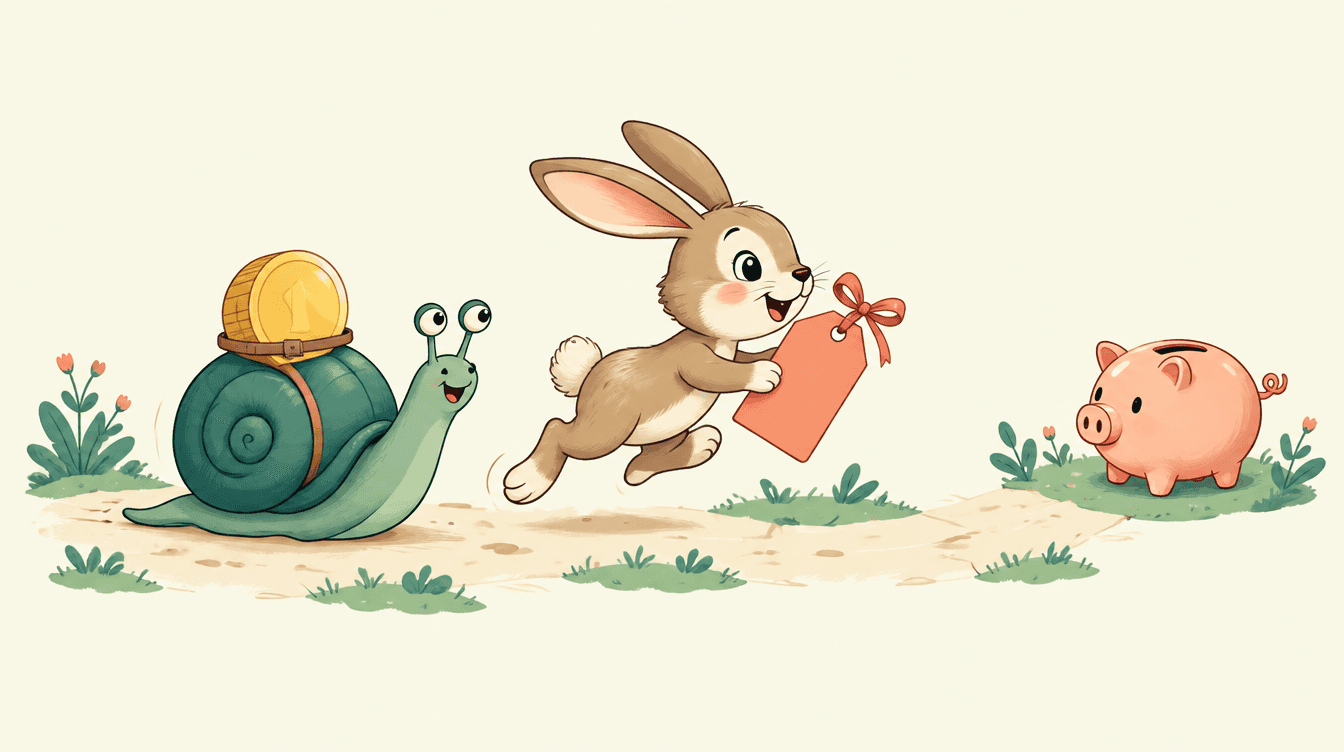
"Take 2% off if you pay within 10 days." You've probably seen that line on an invoice. It looks friendly. It looks smart. For most one-person businesses, I think it's a bad deal.
So, should you offer a discount for early payment? My answer: rarely, and only after you've done the sums.
Should I offer a discount for early payment? Do the sums first
Say you're a tutor who invoices £1,000 a month to a small company. Your terms are 30 days. You offer 2% off if they pay in 10 days.
If they take it, you get £980 twenty days sooner. You've given up £20 to get your money 20 days early.
Here's my own calculation. £20 on £980 is about 2%. There are about 18 blocks of 20 days in a year. So the discount is worth roughly 37% a year, in effect. That's the price you're paying for the cash. A bank overdraft costs far less.
Now the other side. Some customers pay on time anyway. Give them the discount and you've just handed over £20 for nothing. The ones who needed chasing are usually the ones who ignore the offer.
When an early payment discount can make sense
I wouldn't say never. There are a few cases where it works.
- You're short of cash and a bill is due. If a £20 discount stops you missing a payment that costs more, fine. Treat it as a one-off.
- The customer is large and slow. Some big companies take 60 or 90 days. A discount might move you to the front of the queue.
- The job is big and the margin is fat. If your margin is 60%, 2% hurts less. If it's 15%, 2% takes a seventh of your profit.
If none of those fit, I'd skip it.
What the law already gives you
Before you pay people to pay early, know what you can already claim from people who pay late.
GOV.UK says that for business to business transactions, you can charge interest on a late commercial payment at "8% plus the Bank of England base rate".
You can also claim a fixed sum towards recovery costs. GOV.UK lists £40 for debts up to £999.99, £70 for debts from £1,000 to £9,999.99, and £100 for debts of £10,000 or more. I fetched both pages on 29 October 2026. Neither page shows a date.
So the law already puts a price on lateness. Many self-employed people never use it, because they don't want to fall out with a customer. I wrote about how the interest works in late payment interest in the UK.
I'd rather put my effort there than give money away to everyone.
A better way to get paid sooner
A discount is a blunt tool. These work better, and cost you nothing.
- Send the invoice the same day. Waiting a week to invoice means you're paid a week later. See when to send an invoice.
- Shorten your terms. Fourteen days instead of thirty. Many customers won't mind.
- Take a deposit. Half up front means half your risk is gone. I covered it in should I take a deposit.
- Make it easy to pay. If paying takes five minutes of typing sort codes, people put it off. A payment link they tap is faster.
- Say the due date out loud. "Payment's due on the 14th" in the message, not only in the PDF.
What I'd say to a customer who pays late
Not everyone pays late on purpose. Most people just forget, or the invoice sits in an inbox. A short, friendly message on the due date fixes more than any discount does. Something like: "Hi, just a reminder that invoice 14 is due today. Here's the link to pay. Thanks!" It takes ten seconds. It costs you nothing, and it keeps the relationship warm. If that doesn't work after a week or two, then you can think about interest.
If you still want to try it
Test it on one customer, not everyone. Write the terms on the invoice in plain words, for example "£980 if paid by 8 November, £1,000 after". Check after three months. Did they pay faster? Did you get more cash, or only give away more money?
And keep the paperwork clean. If a customer takes a discount, your records should show what you actually received. HMRC cares about your real income, so write down the amount you were paid and why it was lower.
I'm not a tax adviser, and VAT adds its own rules to prompt payment discounts. The sources I found disagreed on the detail, so if you're VAT registered, ask your accountant before you offer one.
My take
I'd offer a discount for early payment only when I need the cash and the maths works. Otherwise I'd shorten my terms, invoice on the day, and make paying easy.
At Vcents, we build a way to send a payment request on WhatsApp. The customer taps the link and pays from their banking app. Getting paid sooner is mostly about removing friction, not giving money away.
Sources
- GOV.UK: Charging interest on late commercial payments, fetched 29 October 2026. The page shows no date.
- GOV.UK: Claim debt recovery costs, fetched 29 October 2026. The page shows no date.
Vcents turns the thread into a payment.
Ask for money in plain English. Your customer taps once, authorises in their own bank, and the receipt lands back in the chat.
How receiving payments works