What is open banking in the UK? A plain guide
What is open banking in the UK? A plain guide to how it works, how a payment happens, what it means for self-employed people, and how safe it is.
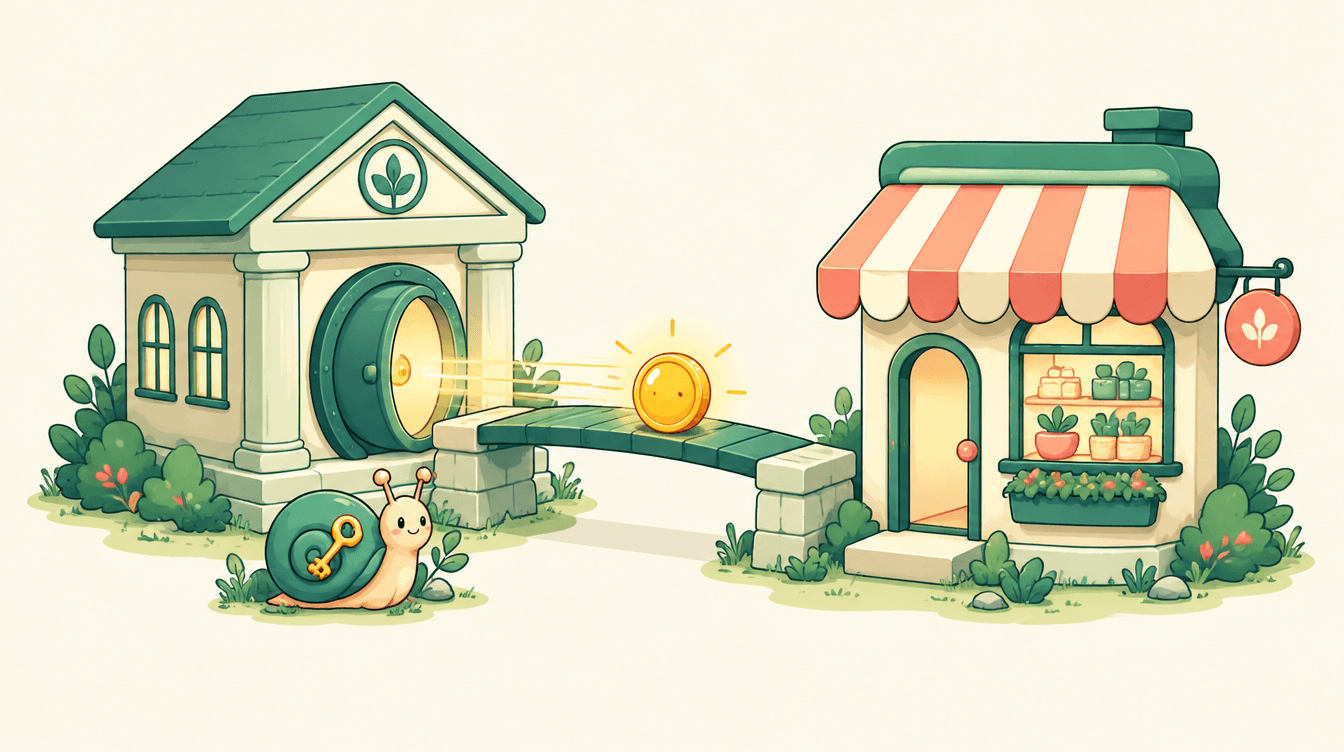
Over one billion payments have now been made through open banking at the UK's major high street banks. Open Banking Limited, the body behind the standards, announced that milestone on 30 July 2026. Plenty of people have used it without knowing what it is.
So, what is open banking in the UK? It's a way for you to let an app or website work with your bank account, using your permission and your bank's own login. This guide covers what it does, how a payment works, and what it means if you're self-employed. I read the Open Banking Limited pages below this morning, and every number comes from them.
What is open banking, in plain words?
Open Banking Limited describes it as "a simple, secure way to help you move, manage and make more of your money." In practice it does two things.
- Share your data. You can let an app see your account information. A budgeting app is the usual example.
- Start a payment. You can let an app ask your bank to send money from your account.
For getting paid, the second one matters. It's called payment initiation. Your customer taps a link, their bank app opens, they approve a payment, and the money moves from their account to yours.
No card is involved. It's an account-to-account payment, which is how Open Banking Limited describes it in its July 2026 release.
How does an open banking payment work?
Say you're a dog walker and a customer owes you £90.
- You send them a payment link.
- They tap it and pick their bank.
- They land in their own bank's app or website and log in the way they always do.
- They check the amount and who it's going to, then approve.
- The bank sends the money to your account.
You never see their bank details, and they never type a card number. Open Banking Limited says you'll "never be asked to give access to your bank login details or password to anyone other than your own bank."
That last point is the safety design. The app that sends the link doesn't get the customer's password. The customer proves who they are to their own bank.
Who has to offer it?
Not every bank. Open Banking Limited says only the UK's nine largest banks and building societies are required to offer it. They're AIB Group, Bank of Ireland, Barclays, HSBC, Lloyds, Nationwide, Northern Bank (Danske), NatWest and Santander. Smaller ones can opt in.
The firms that build apps on top of it have to be on the Open Banking Directory. To join, they must be "regulated by the FCA or European equivalent," according to Open Banking Limited.
So when you pick a tool that uses open banking, check that the company is regulated. It's a quick thing to look up and worth doing before you send a customer a link.
How big is it in the UK now?
Open Banking Limited published these figures for June 2026:
- Total payments: 40.16 million in the month
- Single domestic payments: 32.43 million
- Sweeping variable recurring payments (VRPs): 7.73 million
The same release says that month saw a record 2.81 billion API calls. An API call is one request between an app and a bank's systems.
These numbers cover the big banks. Open Banking Limited says it counts the API calls across those nine banks.
Look back a year and a bit and the picture was smaller. Its Impact Report 7, published on 16 May 2025, said there were 13.3 million active users as of March 2025, up 40% on the year before. It also counted 31 million open banking payments in March 2025 alone, which it put at 1 in 13 (7.9%) of all Faster Payments. Payments grew 70% year on year.
At 7.9% of Faster Payments in March 2025, open banking was still a small share of the total. It isn't tiny any more.
What does it mean if you're self-employed?
Three things stand out to me.
You get paid straight into your bank account. The customer's bank sends the money to yours. There's no card machine involved.
The customer has to approve it. That's a good thing for security. It also means a payment link can sit unopened if they ignore it. Chasing still matters, and I wrote about how to chase an unpaid invoice if that's your problem.
Your customer approves in their own bank app. They log in the way they always do, so they don't need to type card details anywhere.
If you're a sole trader wondering whether you need a separate account to receive these payments, I covered that in do I need a business bank account as a sole trader.
Is open banking safe?
Open Banking Limited says security is built in, using Financial Grade API specifications. You choose what an app can see and for how long. You can withdraw consent in the app, or through your bank or building society.
On refunds, it says that if unauthorised payments happen, your bank "will normally refund your money." You're also covered by data protection law and can complain to the Financial Ombudsman Service.
I'd still apply the usual caution. Check the amount and the name on the approval screen, and only follow links from people you expect to hear from.
My take
Open banking has been quiet for years because it mostly happens behind the scenes. For a small business owner it's the first payment method in a long time that lets a customer pay from the app they already trust, with no card details.
That's the idea behind Vcents. You ask for money in WhatsApp, the customer gets a link, and they pay from their bank app. The money goes to your account.
Sources
Vcents turns the thread into a payment.
Ask for money in plain English. Your customer taps once, authorises in their own bank, and the receipt lands back in the chat.
How receiving payments works